Introduction
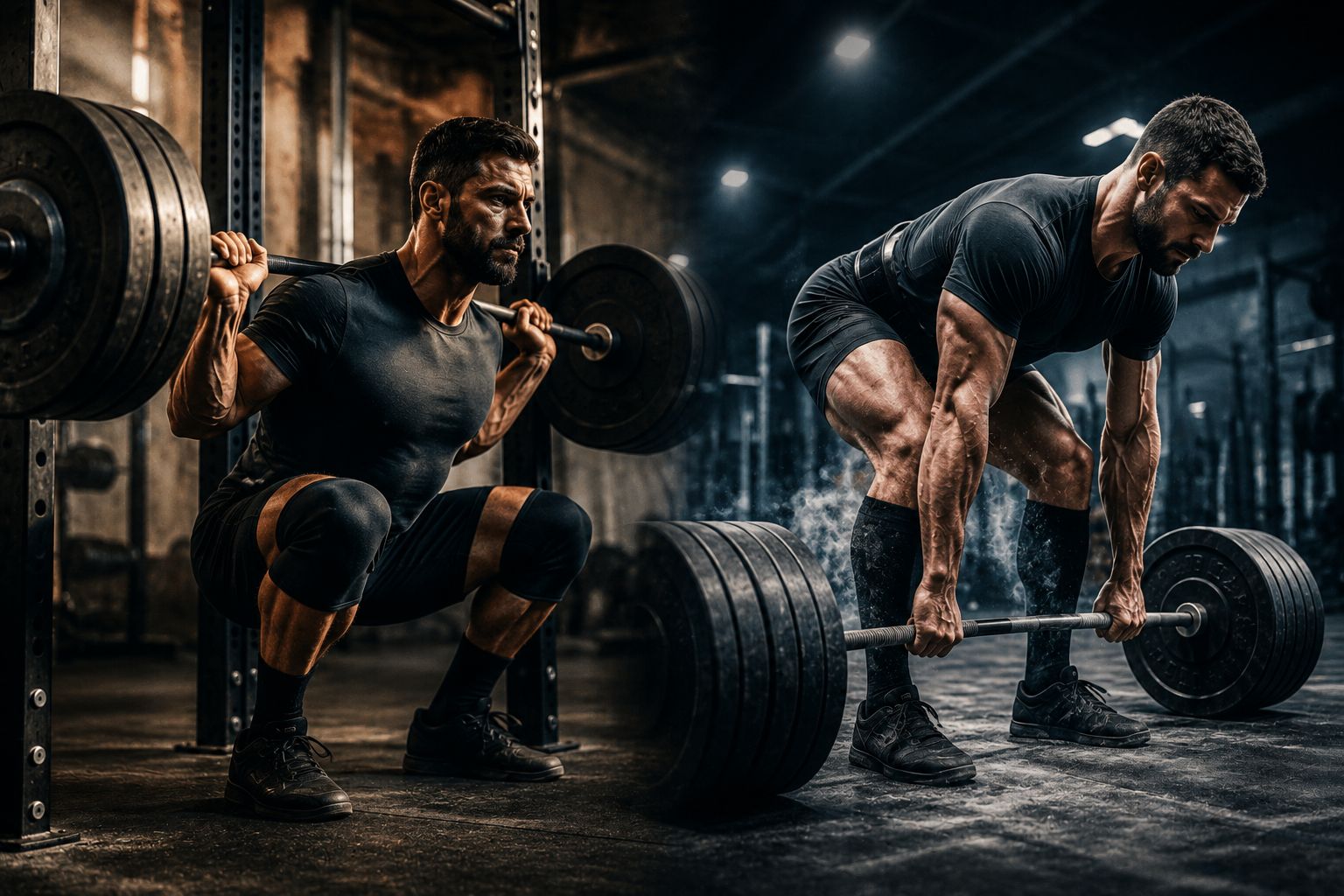
In the world of strength training, countless exercises can help improve fitness and athletic performance. However, few movements have earned the respect and recognition of the squat and deadlift.
Often referred to as two of the most important lifts in strength training, these exercises have become foundational tools for athletes, powerlifters, bodybuilders, and fitness enthusiasts alike.
The squat and deadlift are more than just exercises. They are benchmarks of physical capability, indicators of functional strength, and essential components of long-term athletic development.
Understanding how these movements contribute to strength performance can help lifters maximize results while building a stronger, more resilient body.
Why Strength Performance Matters
Strength performance refers to the body’s ability to generate force efficiently and effectively.
While aesthetics are often a motivating factor for many gym-goers, improved strength performance offers benefits that extend beyond appearance.
These benefits include:
- Increased athletic ability
- Improved movement efficiency
- Greater physical resilience
- Better posture and stability
- Enhanced confidence
- Reduced injury risk
Building strength creates a foundation that supports nearly every physical activity, both inside and outside the gym.
The Squat: The King of Lower-Body Strength
The squat is widely considered one of the most effective exercises for developing total-body strength.
Although primarily known as a lower-body movement, the squat requires coordination between multiple muscle groups.
Muscles Involved
A properly executed squat targets:
- Quadriceps
- Glutes
- Hamstrings
- Core muscles
- Lower back
- Hip stabilizers
This combination makes the squat one of the most comprehensive strength-building exercises available.
Benefits of Squatting
Increased Lower-Body Power
Squats develop the muscles responsible for jumping, sprinting, and explosive movement.
Athletes in many sports rely on squat training to improve performance.
Improved Stability
Squatting strengthens the hips, knees, ankles, and core while improving balance and coordination.
Enhanced Muscle Development
Because squats recruit a large amount of muscle mass, they create a significant stimulus for growth and adaptation.
Functional Strength
The squat closely resembles many everyday movement patterns, making it highly transferable to daily life.
The Deadlift: The Ultimate Test of Strength
If the squat is the king of lower-body training, the deadlift is often viewed as the ultimate expression of total-body strength.
The deadlift involves lifting a loaded barbell from the floor to a standing position.
While the movement appears simple, it demands strength, stability, and coordination from nearly every major muscle group.
Muscles Involved
The deadlift trains:
- Glutes
- Hamstrings
- Lower back
- Upper back
- Core
- Forearms
- Grip muscles
Few exercises can match the deadlift’s ability to recruit so much musculature simultaneously.
Benefits of Deadlifting
Full-Body Strength Development
The deadlift strengthens both the posterior chain and upper body, creating a balanced foundation of strength.
Improved Posture
Strong back and core muscles help support proper posture and spinal alignment.
Increased Athletic Performance
Many athletic movements require force production from the hips and posterior chain.
Deadlifts help develop these critical qualities.
Greater Mental Toughness
Heavy deadlifts challenge both the body and mind, teaching focus, determination, and resilience.
How Squats and Deadlifts Improve Strength Performance
Increased Force Production
Both lifts train the body to generate high levels of force.
This ability directly contributes to:
- Sprinting
- Jumping
- Throwing
- Lifting
- Athletic competition
The stronger the body becomes, the more efficiently it can produce force.
Better Neuromuscular Coordination
Strength is not only about muscle size.
The nervous system plays a crucial role in performance.
Regular squat and deadlift training improves communication between the brain and muscles, allowing the body to move more efficiently.
Stronger Core Stability
Both lifts require significant core engagement.
A strong core improves:
- Balance
- Posture
- Force transfer
- Injury prevention
This stability supports performance in nearly every physical activity.
Common Mistakes That Limit Progress
Prioritizing Weight Over Technique
One of the most common mistakes is increasing weight before mastering proper form.
Poor technique can reduce performance and increase injury risk.
Strong fundamentals should always come first.
Neglecting Recovery
Progress requires adequate recovery.
Without sufficient sleep, nutrition, and rest, performance improvements become difficult to sustain.
Recovery is an essential part of strength development.
Inconsistent Training
Strength is built through repeated effort over time.
Occasional intense workouts cannot replace consistent training habits.
Small improvements accumulated over months often produce the greatest results.
Building Strength Performance Safely
Focus on Technique
Learning proper squat and deadlift mechanics should be the first priority.
Movement quality always comes before load.
Use Progressive Overload
Gradually increasing training demands allows the body to adapt safely and effectively.
Train Consistently
Strength development requires patience and repetition.
Consistency remains one of the most important factors for long-term success.
Listen to Your Body
Recovery and injury prevention should always be considered when planning training.
Long-term progress depends on sustainable habits.
The Mental Side of Strength Performance
One of the most overlooked aspects of strength training is its effect on mindset.
Every challenging squat session and every difficult deadlift teaches valuable lessons:
- Patience
- Discipline
- Persistence
- Accountability
- Resilience
The ability to push through discomfort while maintaining focus often transfers into other areas of life.
Many lifters discover that the confidence developed through strength training extends far beyond the gym.
Strength Is a Long-Term Journey
There are no shortcuts to becoming stronger.
Progress is earned through consistent effort, intelligent training, and a willingness to trust the process.
The squat and deadlift represent more than exercises.
They symbolize:
- Commitment
- Discipline
- Hard work
- Continuous improvement
These principles form the foundation of strength culture and help individuals develop both physical and mental resilience.
Conclusion
Squats and deadlifts remain two of the most effective exercises for improving strength performance.
By developing lower-body power, posterior chain strength, core stability, and neuromuscular coordination, these movements provide benefits that extend far beyond the gym floor.
While physical strength is the most visible outcome, the discipline, patience, and resilience developed through training are often the most valuable rewards.
Whether your goal is athletic performance, personal development, or long-term health, mastering the squat and deadlift can serve as a powerful foundation for lifelong strength.
Because true strength is not built in a day—it is built rep by rep, workout by workout, year after year.